

A light therapy mask, also known as an LED mask, is an optoelectronic device designed to expose the skin to specific light radiation, typically in the visible and near-infrared spectrums. These devices fall within the field of photobiomodulation (PBM), which involves using specific wavelengths to induce biological responses at the cellular level.
In this context, the performance and optical safety of a light therapy mask depend on controlling several key optical parameters: wavelength, energy flux (also known as irradiance), spatial uniformity, and delivered dose (fluence).
Only tests conducted in a specialized laboratory can accurately determine actual performance values and ensure the optical safety of these LED masks.
The light therapy mask market is experiencing strong growth, characterized by significant heterogeneity among available products. Many devices have significant technical limitations, both in terms of performance and safety.
In this context, in-depth optical characterization is essential to:
Verify the actual performance of the LED system (energy irradiance, uniformity, spectrum, dose)
Ensure the optical safety of users
Verify the consistency of the manufacturer’s technical data
Ensure safe market launch
Conduct product benchmarks against the competition
The effectiveness of these masks is based on measurable and comparable optical performance evaluated using test methods established by PISÉO and specifically designed to meet user needs.
These methods include, in particular:
- Mapping the uniformity of radiation across different areas of the face (eye contour, cheeks, nasolabial folds, chin)
- Measurement of energy irradiance (W/m²) : Average (across all areas of the face), Maximum & Minimum
- Peak irradiance (W/m²/nm)
- Spectral characterization of the device
- Fluence in J/cm²
These tests are conducted under normal usage conditions and at varying distances depending on how users wear these masks.
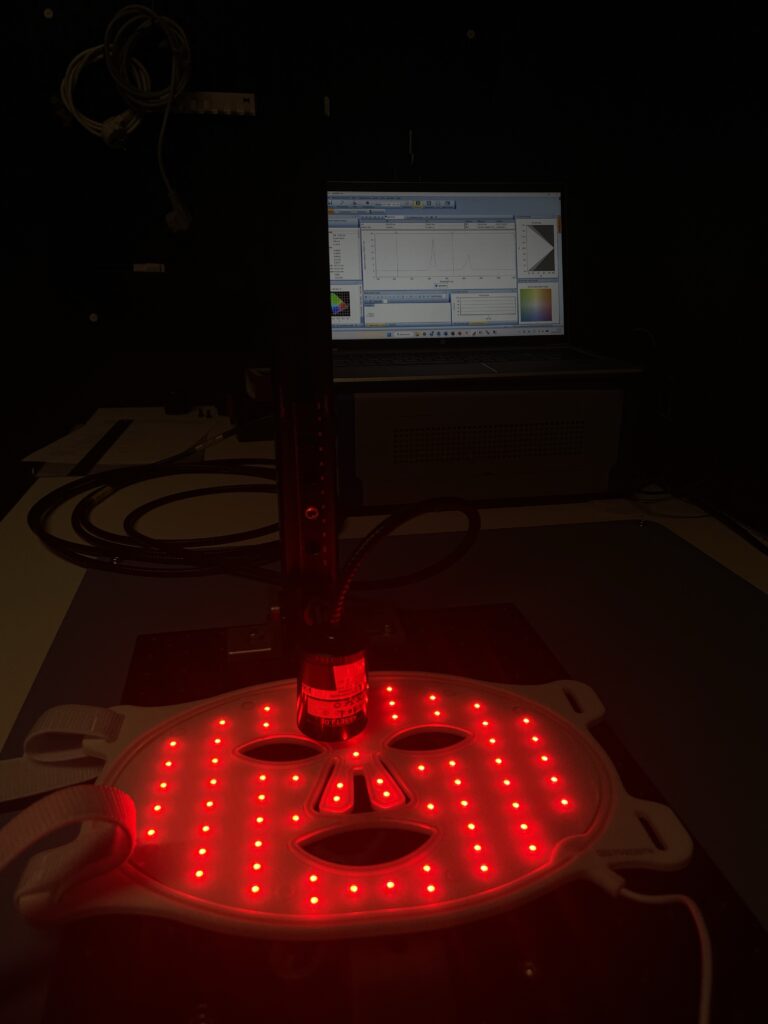
Beyond the average values, analysis of irradiance peaks and spatial distribution is essential. Mapping allows for the identification of potential exposure heterogeneities and the evaluation of the consistency of the treatment delivered across the entire face.
Since these masks are intended for direct use on the skin and near the eyes, optical safety is a major concern.
PISÉO conducts accredited testing in accordance with the EN/IEC 62471 standard to assess photobiological risk and verify that the devices are safe for users under normal conditions.
Placing a light therapy mask on the market requires compliance with European product safety directives. This is based on various standards. The CE marking, which indicates compliance with these directives, is a regulatory requirement; however, it is based on a manufacturer’s declaration and does not in itself constitute proof of safety.
Optical performance does not need to be tested, and the mask’s effectiveness for the user therefore does not need to be demonstrated for it to be marketed.
The technical requirements for demonstrating regulatory compliance are based on specific standards covering various aspects:
- the EN 60335 standard, relating to the electrical safety of household appliances;
- the EN 62471 standard, dedicated to the assessment of the photobiological risk of light sources;
- the IEC 60601 standard, applicable to medical devices or similar products, particularly those intended for home use;
In certain markets, such as North America, demonstrating regulatory compliance through test results is mandatory.
The FDA (Food and Drug Administration) has established strict specifications that must be met in order to market the device in this market.
Therefore, conducting tests at the PISÉO laboratory is an essential step in demonstrating the product’s compliance and effectiveness. The testing methodology—which includes irradiance mapping, average, minimum, and maximum values, spectral analysis, and optical safety tests—enables the production of technical reports that are immediately actionable.
You can therefore rely on PISÉO’s expertise and the capabilities of its optical laboratory to demonstrate that your device meets the FDA’s requirements for photobiomodulation (PBM) devices.